About the Artist
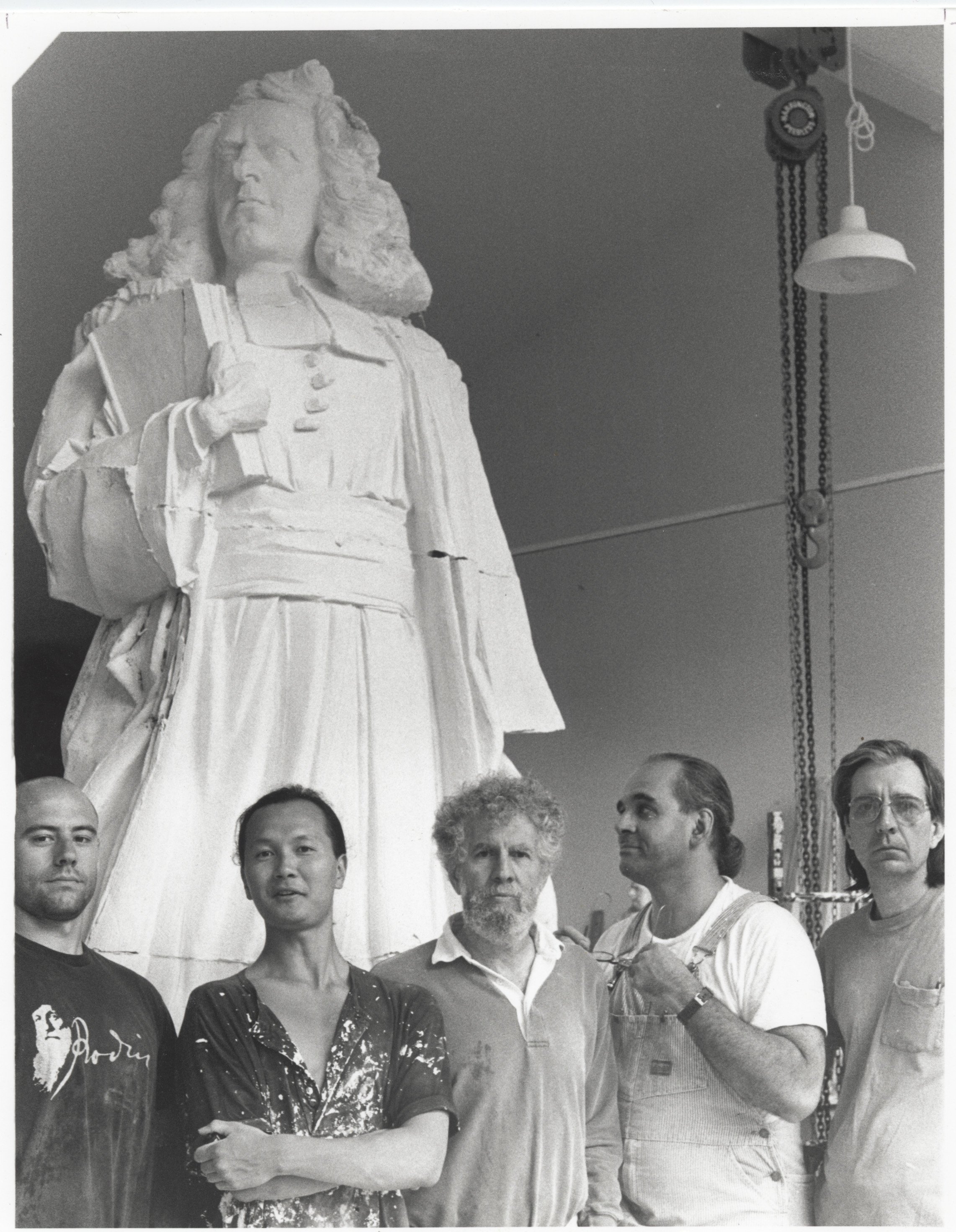
Lewis Cohen’s work, when encountered for the first time, does not present itself as a fixed or fully resolved body of ideas. Rather, it reflects a practice shaped over many years by uncertainty, revision, and a continual process of discovery.
There is no single, linear path through his work. It has developed unevenly—moving forward, turning back, and often returning to earlier concerns. Certain images and subjects have remained with him for decades, not out of consistency, but because they have not been fully resolved. At times the work has advanced with clarity; at others, it has faltered or been set aside. These periods of doubt and interruption are not separate from the work, but fundamental to it.
Drawing is central to Cohen’s process. It is not used to document what is already known, but to arrive at something not yet understood. Many drawings begin without a clear intention and are altered repeatedly—folded, reworked, and disrupted—to avoid predictable outcomes. The goal is not to refine an image, but to discover one. If the result feels too certain or expected, it often loses its usefulness.
Sculpture follows a similar approach, though with greater consequence. Cohen does not attempt to reproduce what he observes. Instead, he seeks a form that embodies an idea. The figure—whether whole or fragmented—serves as a structure through which that idea can emerge. Meaning is not applied to the work from the outside; it must exist within the form itself.
This approach brings with it a persistent sense of doubt. There is a reluctance to trust completely in what has been made, and an awareness that decisions, particularly in permanent materials, cannot easily be undone. The finality of a work often intensifies this uncertainty rather than resolves it.
For the viewer, the work resists straightforward explanation. Its meaning is not fully accessible through language, nor is it intended to be. It exists in the direct experience of the object—its form, its presence, and the process it implies. Written or spoken descriptions may assist, but they cannot replace that encounter.
Over time, Cohen’s work has changed in many ways, without following a steady progression. Instead, it reflects an ongoing engagement with form as a way of thinking—one in which each piece remains part of a larger, unresolved inquiry.